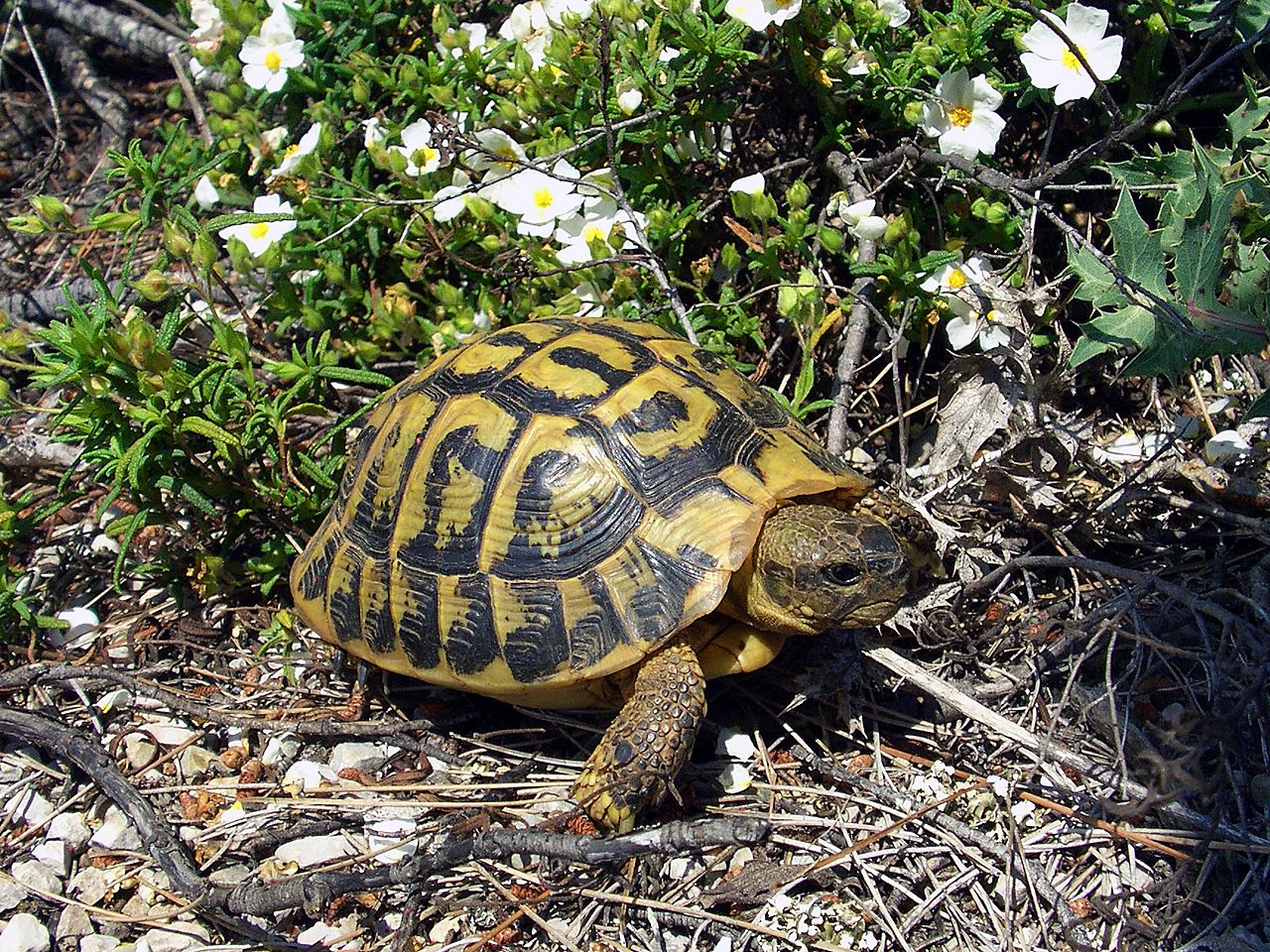
Turtle · Medium Breed
Hermann's Tortoise Age Calculator
Use this Hermann's Tortoise age calculator to convert turtle years to human years. You can also check the average Hermann's Tortoise lifespan, adult weight range, growth chart, feeding guide, and breed facts in one place.
Quick Answer
Hermann's Tortoise facts at a glance
Average lifespan
50-100 years
Adult weight
2-4 kg
Fully grown
18-24 months
The Calculator
How old is your Hermann's Tortoise in human years?
At 1 year old
Your Hermann's Tortoise is approximately 1.0 in human years.
Field Notes
Hermann's Tortoise Lifespan, Size, and Care
Hermann's Tortoise (Testudo hermanni) is native to parts of southern Europe, including regions around the Mediterranean. It has been kept in captivity for many years because of its manageable size compared with larger tortoise species, but it is still a long-lived reptile that requires serious long-term commitment.
In temperament, Hermann's Tortoises are usually alert, active, and curious rather than cuddly or highly social with people. Many become comfortable with regular routines and may recognize their keeper, but they can become stressed by excessive handling or crowded housing.
Good care centers on proper lighting, heat, diet, and enclosure design. They need strong UVB exposure, a warm basking area, cooler shaded zones, clean water, and a high-fiber diet based mainly on weeds, grasses, and leafy greens with calcium support; diets high in fruit or protein can cause illness.
Exercise is very important because this species naturally spends much of the day walking, grazing, and exploring. A secure outdoor enclosure is ideal in appropriate climates, while indoor setups should still provide enough floor space, varied terrain, and enrichment to prevent inactivity and obesity.
Temperament
Exercise Needs
moderate
Health Watch
- Metabolic bone disease and shell pyramiding from poor UVB exposure or calcium imbalance
- Respiratory infections related to low temperatures, damp conditions, or stress
- Parasite burdens such as intestinal worms or protozoa
- Shell rot or shell injuries
- Dehydration and kidney problems from poor hydration or improper diet
Grooming
Hermann's Tortoises need minimal grooming, but their shell, skin, nails, eyes, and beak should be checked regularly and the enclosure kept very clean.
Growth Curve
Hermann's Tortoise weight chart
Typical weight progression from young to adult. The tinted band marks the healthy adult range. 2-4 kg.
Nutrition, Staged
Hermann's Tortoise Feeding Guide
Use this Hermann's Tortoise feeding guide as a starting point for common life stages, then adjust for body condition, activity, and veterinary advice.
Formative years
Young
Young turtles and tortoises do not all eat the same diet, so the exact plan should match the species, age, UVB setup, and calcium program. Use a reptile-specific feeding plan from a trusted species guide or reptile veterinarian instead of relying on a generic portion chart.
Peak years
Adult
Adult reptile diets vary widely by species, with some needing a mostly plant-based diet and others needing a mix of greens, pellets, insects, or aquatic prey. Husbandry matters as much as ingredients, so UVB lighting, calcium balance, heat, and body condition should be reviewed alongside the diet.
Mature years
Senior
Older turtles and tortoises should stay on a species-appropriate diet, but appetite, shell condition, mobility, and body weight should be checked more often as they age. A reptile veterinarian should review the plan if there are changes in growth, egg laying, shell texture, or feeding response.
Questions, Answered
On the Hermann's Tortoise
That depends on the pet's actual age. Use the calculator above to estimate a Hermann's Tortoise's age in human years using the method shown on this page.
With proper care, Hermann's Tortoises can live for several decades and often outlive many other common pets. Prospective owners should plan for a very long-term commitment and consistent veterinary care when needed.
Most Hermann's Tortoises stay relatively small compared with many pet tortoises, with adults often reaching about 5 to 8 inches in shell length, though some females can grow larger. Size varies with sex, subspecies, genetics, and husbandry.
Most Hermann's Tortoises are close to full size around 18-24 months, although growth rate and final build vary from one pet to another.
The ideal diet is mostly high-fiber weeds, grasses, and leafy greens such as dandelion, plantain, endive, escarole, and similar items. Fruit should be rare to avoided, and animal protein should not be fed because it can contribute to digestive and metabolic problems.
Yes, but indoor housing must be large, dry, well ventilated, and equipped with proper heat and high-quality UVB lighting. They generally do best with access to a secure outdoor enclosure when weather permits because natural sunlight and space support better activity and shell health.
Many healthy adult Hermann's Tortoises naturally brumate, but it should only be done when the animal is clinically healthy and the owner understands safe preparation and temperature control. Sick, underweight, very young, or poorly conditioned tortoises should not be brumated without reptile-veterinary guidance.
Adjacent Breeds
Breeds often compared with Hermann's Tortoise
 medium
Related breed · size and lifespan prioritized
Leopard Tortoise
 medium
Related breed · size and lifespan prioritized
Box Turtle
 medium
Related breed · size and lifespan prioritized
Greek Tortoise
 medium
Related breed · size and lifespan prioritized