
Turtle · Medium Breed
Greek Tortoise Age Calculator
Use this Greek Tortoise age calculator to convert turtle years to human years. You can also check the average Greek Tortoise lifespan, adult weight range, growth chart, feeding guide, and breed facts in one place.
Quick Answer
Greek Tortoise facts at a glance
Average lifespan
50-125 years
Adult weight
2-5 kg
Fully grown
18-24 months
The Calculator
How old is your Greek Tortoise in human years?
At 1 year old
Your Greek Tortoise is approximately 0.9 in human years.
Field Notes
Greek Tortoise Lifespan, Size, and Care
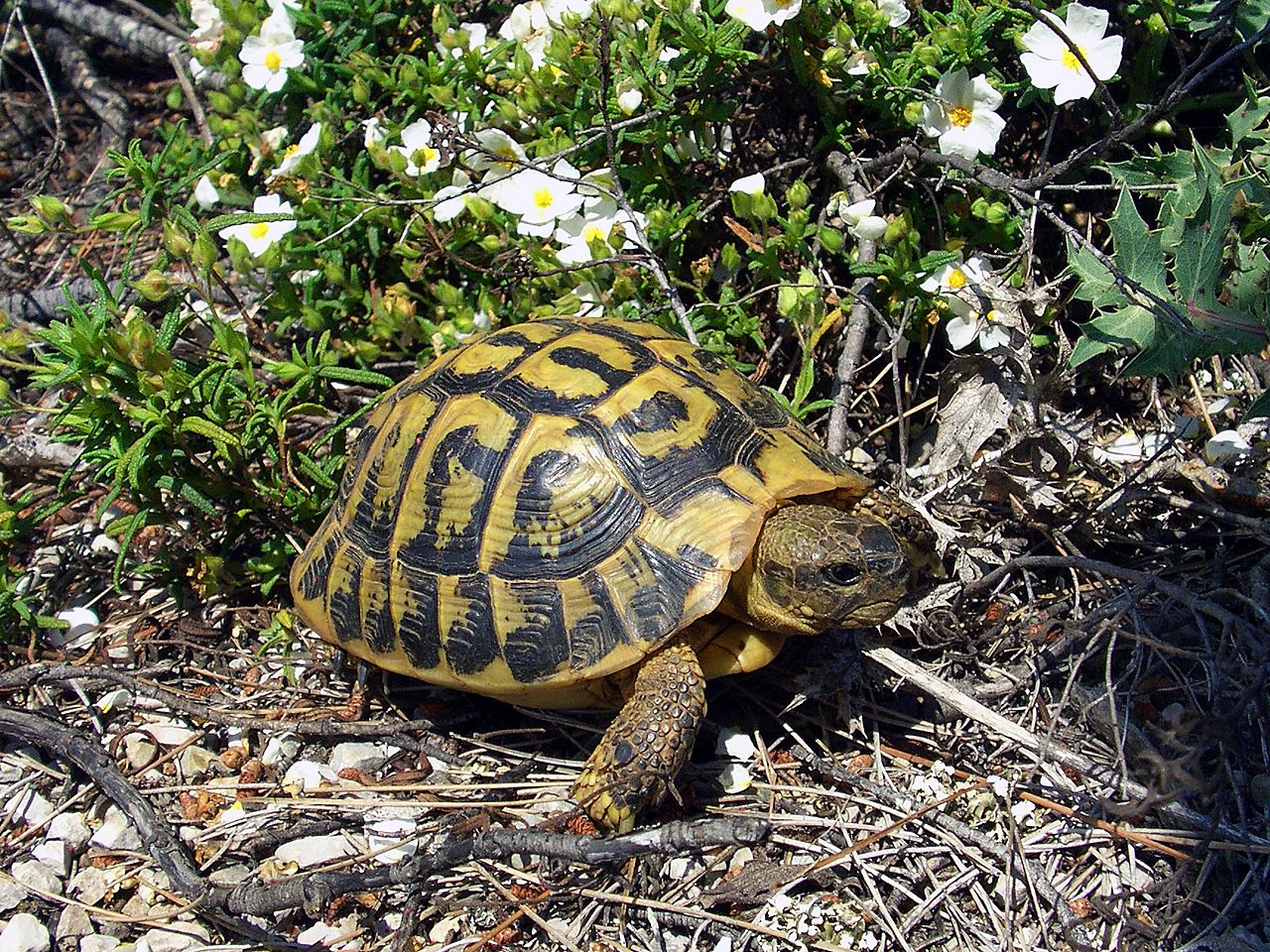
Greek Tortoises (Testudo graeca) come from parts of southern Europe, North Africa, and the Middle East, where they inhabit dry scrubland, grassland, and rocky hillsides. They have been kept by humans for a very long time and are one of the best-known pet tortoise species, though different local forms can vary in size, color, and climate tolerance.
In temperament, Greek Tortoises are usually steady, quiet, and non-aggressive, though individuals can be shy at first and males may become territorial. They are not cuddly pets, but many become confident around their keeper and show strong feeding responses and daily routines.
Care is centered on correct husbandry: a warm, dry enclosure with a proper heat gradient, access to high-quality UVB, and a calcium-rich diet based mainly on grasses, weeds, and leafy greens. They do best with dry shell conditions, clean water, safe substrate, and regular monitoring of weight, appetite, and stool quality, since most health problems in this species trace back to incorrect temperature, humidity, lighting, or diet.
Exercise needs are moderate but important, because Greek Tortoises benefit from walking, grazing, exploring, and digging. They should have enough space to roam every day, and many do very well in secure outdoor pens during suitable warm weather, where natural sunlight and varied terrain support muscle tone, shell health, and natural behavior.
Temperament
Exercise Needs
moderate
Health Watch
- Respiratory infections
- Metabolic bone disease from poor UVB or calcium imbalance
- Shell pyramiding from improper growth conditions
- Internal parasites
- Shell rot or other shell infections
Grooming
Greek Tortoises need minimal grooming, with routine shell checks, occasional gentle cleaning if soiled, and regular beak and nail evaluation as part of normal husbandry.
Growth Curve
Greek Tortoise weight chart
Typical weight progression from young to adult. The tinted band marks the healthy adult range. 2-5 kg.
Nutrition, Staged
Greek Tortoise Feeding Guide
Use this Greek Tortoise feeding guide as a starting point for common life stages, then adjust for body condition, activity, and veterinary advice.
Formative years
Young
Young turtles and tortoises do not all eat the same diet, so the exact plan should match the species, age, UVB setup, and calcium program. Use a reptile-specific feeding plan from a trusted species guide or reptile veterinarian instead of relying on a generic portion chart.
Peak years
Adult
Adult reptile diets vary widely by species, with some needing a mostly plant-based diet and others needing a mix of greens, pellets, insects, or aquatic prey. Husbandry matters as much as ingredients, so UVB lighting, calcium balance, heat, and body condition should be reviewed alongside the diet.
Mature years
Senior
Older turtles and tortoises should stay on a species-appropriate diet, but appetite, shell condition, mobility, and body weight should be checked more often as they age. A reptile veterinarian should review the plan if there are changes in growth, egg laying, shell texture, or feeding response.
Questions, Answered
On the Greek Tortoise
That depends on the pet's actual age. Use the calculator above to estimate a Greek Tortoise's age in human years using the method shown on this page.
Greek Tortoises are long-lived reptiles and often live 40 to 60 years or more with proper care. Because they are such a long-term commitment, owners should be prepared for decades of consistent husbandry and veterinary support.
Greek Tortoises typically reach 2-5 kg as adults, although sex, husbandry, and body condition can shift the range.
Most Greek Tortoises are close to full size around 18-24 months, although growth rate and final build vary from one pet to another.
Greek Tortoises should eat a high-fiber, plant-based diet made mostly of weeds, grasses, and leafy greens such as dandelion, plantain, escarole, and endive. Fruit should be very limited or avoided, and animal protein should not be fed because it can contribute to digestive and shell health problems.
Yes, but the enclosure must be large enough and provide a proper basking area, cooler zone, UVB lighting, and safe substrate. Indoor housing works best when it closely replicates the species' natural environment, and outdoor access in appropriate weather is often beneficial.
Some Greek Tortoises may brumate, but this depends on their geographic origin, overall health, age, and local climate conditions. Brumation should never be attempted without confirming the tortoise is healthy and understanding the needs of that specific type, because improper brumation can be dangerous.
Cohabitation can be risky because tortoises may compete for food, bully one another, or spread disease and parasites even when they seem calm. Many do best housed alone unless the keeper is experienced, has adequate space, and can closely monitor behavior and health.
Adjacent Breeds
Breeds often compared with Greek Tortoise
 medium
Related breed · size and lifespan prioritized
Hermann's Tortoise
 medium
Related breed · size and lifespan prioritized
Leopard Tortoise
 medium
Related breed · size and lifespan prioritized
Box Turtle
 medium
Related breed · size and lifespan prioritized